Source nano expansion board for DIY, Ethernet, and Prototyping
Explore 30 listings for the nano expansion board, comparing options for DIY projects, Ethernet shielding, and prototype development. Buyers can review specifications, pricing, and customization features from verified suppliers.
Key considerations
Products List








Comprehensive Sourcing Guide
Strategic Sourcing Guide for Nano Expansion Boards
The procurement of expansion boards designed for microcontroller platforms, specifically those marketed as compatible with "Nano" architectures, requires a disciplined approach to technical verification and supplier assessment. The market for these components is characterized by a wide variance in product definitions, ranging from generic prototyping shields to specialized industrial interface modules. Buyers must navigate a landscape where product names often overlap with distinct functional categories, necessitating a rigorous examination of specifications before placing orders. This guide outlines the critical factors for sourcing these boards, focusing on the specific attributes observed in current market listings, such as the CSC-217 and CSC-201 models, and the diverse packaging and certification standards associated with them.
Technical Specifications and Functional Classification
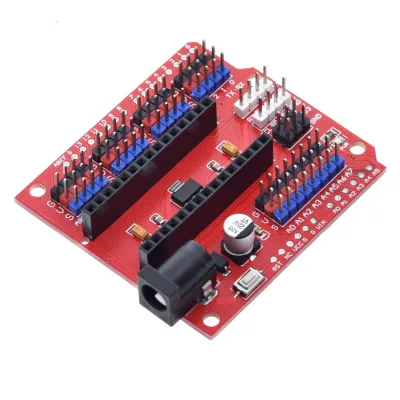
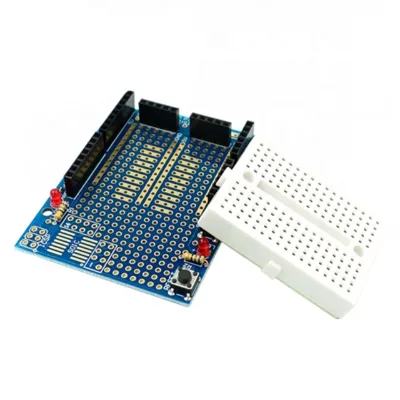
When evaluating nano expansion boards, the primary distinction lies in the intended application and the specific interface capabilities provided. The market offers products explicitly labeled as "Ethernet Shields" or "Multi Function Expansion Boards," which serve different operational needs. For instance, a board designated as a "Multi Function Expansion Board for Nano" typically functions as an interface layer that adds connectivity or control capabilities to a base microcontroller unit. In contrast, other listings describe "Protoshield Prototype Expansion Boards," which are designed for rapid prototyping and DIY applications.
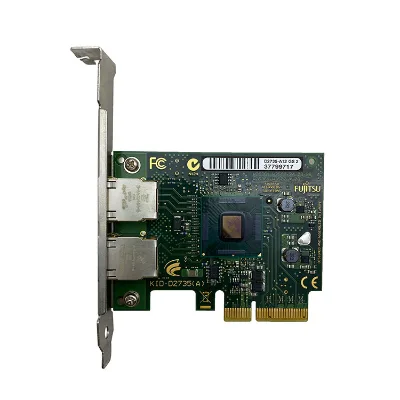
The technical architecture of these boards varies significantly. Some units are described with a "Wired" type classification and support an "Ethernet" network, indicating their role in networked automation or data transmission. Others are categorized by their mounting type, such as "DIP" (Dual In-line Package) or generic "Multi Function Expansion Board" mounting styles, which dictates how they integrate with the host board. The physical dimensions are often listed as "Na" (Not Applicable) or unspecified in generic catalogs, requiring the buyer to request specific dimensional drawings to ensure mechanical fit within the target enclosure.
Furthermore, the chipset is a critical specification. Listings frequently highlight "Original" chipsets, suggesting the use of genuine components rather than reconditioned or generic alternatives. The signal type is often noted as "Continuous," implying a steady-state operation suitable for monitoring or control tasks. The functional scope ranges from "Automatic Control" to specific "Program" tasks, indicating that the board may handle logic operations or data processing. Buyers must verify if the board supports the specific "Information content" required, such as "Data" transmission, or if it serves a more passive role in the circuit.
Compliance, Certification, and Packaging Standards
Compliance with international standards is a non-negotiable aspect of B2B procurement, particularly for electronics that may be deployed in consumer or industrial environments. The supply chain for nano expansion boards often includes products certified under "RoHS" (Restriction of Hazardous Substances) and holding "ISO: CE" marks. These certifications indicate that the product adheres to specific environmental and safety regulations, which is essential for market access in Europe and other regions with strict regulatory frameworks.
Packaging plays a dual role in protecting the product and ensuring compliance with logistics standards. A significant portion of the market utilizes "ESD Package" (Electrostatic Discharge) or "esd packing" to protect sensitive electronic components from static damage during transit. Other listings specify "Carton" or "CTN" (Carton) packaging, which is standard for bulk shipping. Some products are packaged as "Generic Package" or strictly as "1 Unit per pack," which affects the unit economics and handling procedures.
The origin of the product is another critical data point for compliance and logistics planning. The majority of these expansion boards originate from "Guangdong, China" or generally "China." This geographic concentration influences the supply chain dynamics, including lead times and shipping routes. Buyers should verify that the "prod_origin" aligns with their company's sourcing policies regarding country of origin. Additionally, the "prod_standard" often specifies the quantity per pack, such as "1 Unit per pack," which is vital for inventory management and cost calculation.
Cost Drivers and Minimum Order Quantity Analysis
The pricing structure for nano expansion boards exhibits a vast range, observed in the market from as low as $0.40 to over $1,000.00 USD. This disparity is not indicative of a single product tier but rather reflects the diversity of the product category, which includes simple prototyping shields and complex, high-specification industrial modules. The "Selling Units" are often listed as "Single item," allowing for low-volume testing, while other listings may enforce higher volume requirements.
Minimum Order Quantity (MOQ) is a significant variable in the total cost of ownership. Market data shows an MOQ range spanning from 1 piece to 50,000 pieces. Some suppliers offer an MOQ of "1 Piece," facilitating immediate procurement for small projects or R&D phases. Conversely, other listings specify an MOQ of "100PCS," which is typical for bulk manufacturing runs where unit costs are reduced through economies of scale. Buyers must balance the need for immediate availability against the financial benefits of bulk purchasing.
The weight of the product is another factor influencing logistics costs. Listings indicate weights ranging from 22g to 0.15kg. While seemingly minor, these differences accumulate significantly in large shipments, affecting freight charges and customs duties. The "Weight" specification must be cross-referenced with the "prod_packing" type to accurately calculate the total shipment volume and weight.
Typical Applications and Use Cases
The application of nano expansion boards is highly dependent on the specific model and its functional attributes. The "DIY" application is a primary use case for prototype boards, catering to hobbyists and engineers developing custom solutions. These boards are often used in "Automatic Control" scenarios where the expansion board acts as an interface between the microcontroller and external devices.
In industrial settings, the "Ethernet" support feature makes these boards suitable for networked automation systems. The "Multi Function" designation suggests versatility, allowing the board to handle multiple tasks simultaneously, such as data acquisition and signal processing. The "Task" attribute of "Program" indicates that the board may be involved in executing specific logic sequences or managing data flows.
Specific models, such as the "Expansion Board for Flipper Zero Device," cater to niche markets involving portable security testing or hobbyist hacking tools. Other models, like the "CTH2 CAN-01S1-EB," suggest specialized applications in Controller Area Network (CAN) communication, which is prevalent in automotive and industrial automation. The "Advantage" attributes listed in some catalogs, such as "Lead Free/Lighter Weight," "Waterproof/Weatherproof," and "Termite Resistant," point towards outdoor or harsh environment applications where durability is paramount.
Supplier Evaluation and Verification Protocols
Evaluating suppliers for nano expansion boards requires a focus on the consistency of product attributes and the transparency of the supply chain. Buyers should verify the "Chipset" claim of "Original" components, as this is a common point of differentiation in the market. The presence of specific model numbers, such as "CSC-217," "CSC-201," or "OEM," allows for precise tracking of the product lineage.
Shipping and payment terms are also critical indicators of supplier reliability. Common shipping methods include "DHL," "UPS," "Fedex," "EMS," "TNT," and "Aramex," offering a range of speed and cost options. Payment methods such as "Paypal," "TT" (Telegraphic Transfer), "Western Union," and "Trade Assurance" provide varying levels of financial security for the buyer. The availability of "Trade Assurance" is particularly valuable as it often includes protection against non-delivery or quality disputes.
Buyers must also scrutinize the "Customization" capabilities. The attribute "Customization: Available" and "Customized: Customized" suggests that suppliers may offer tailored solutions, such as specific PCB layouts or firmware pre-loading. However, the "prod_model" listed as "OEM" implies that some products are manufactured for other brands, which may affect the ability to obtain direct technical support or documentation.
Quality Control and Long-Term Procurement Considerations
Quality control for nano expansion boards should focus on the physical and electrical integrity of the components. The "Mounting Type" and "Structure" (e.g., "Combination") must be verified to ensure compatibility with the target system. The "Advantage" attributes, such as "Good Flexural Strength" and "Standard to Highly Impact-Resistant," are qualitative claims that should be backed by test reports or third-party validation before being relied upon for critical applications.
Long-term procurement considerations include the availability of spare parts and the stability of the supply chain. The "prod_packing" method, whether "ESD Package" or "Carton," affects the shelf life and storage requirements of the components. Buyers should also consider the "Lead Time" implications of the "MOQ" requirements; high MOQs may result in longer lead times if the supplier needs to schedule a new production run.
Finally, the "Information content" of the product, specifically "Data," must be managed effectively. In systems where the expansion board handles data transmission, the reliability of the "Signal" (noted as "Continuous") is crucial. Buyers should establish clear acceptance criteria for signal integrity and data throughput to ensure the board performs as expected in the final application. By adhering to these rigorous evaluation protocols, buyers can mitigate risks and secure a reliable supply of high-quality nano expansion boards.
Comparative Analysis of Product Attributes
To facilitate decision-making, the following table summarizes key attributes observed across different product listings, highlighting the diversity in specifications and requirements.
| Attribute Category | Observation A (Generic/Prototype) | Observation B (Industrial/Ethernet) | Observation C (Specialized/Niche) |
|---|---|---|---|
| Product Name | Multi Function Expansion Board for Nano | Ethernet Shield | Expansion Board for Flipper Zero Device |
| Model Number | CSC-217 | CSC-201 | OEM |
| Mounting Type | Multi Function Expansion Board | DIP | DIP |
| Application | DIY | Ethernet Shield | DIY / Specialized |
| Packaging | ESD Package | Carton | Generic Package |
| Certification | RoHS, ISO: CE | RoHS, ISO: CE | Not Specified |
| MOQ | 1 Piece | 100PCS | 1 Piece |
| Origin | Guangdong, China | China | China |
| Weight | 22g | 0.15kg | 22g |
| Chipset | Original | Original | Original |
This comparison underscores the necessity of precise specification matching. While all listed products share common origins and certification baselines, their functional applications and logistical requirements differ substantially. Buyers must align their specific project needs with the correct product attributes to avoid compatibility issues and ensure optimal performance.
FAQs
What certifications do nano expansion boards typically have?
Many nano expansion boards hold RoHS and ISO: CE certifications. These marks indicate compliance with environmental and safety regulations, which is essential for market access in Europe and other regions with strict frameworks.
How is the packaging handled for these expansion boards?
Packaging often includes ESD packages to protect sensitive components from static damage. Some listings specify carton or generic packaging, while others use standard units per pack for bulk shipping and inventory management.
Which models are available for DIY and prototyping applications?
Models like CSC-217 and CSC-201 are available for DIY and prototyping. These boards function as Ethernet shields or multi-function interfaces, supporting continuous signals and automatic control tasks for hobbyist and engineering projects.
Can buyers find suppliers with low minimum order quantities?
Yes, buyers can find suppliers with an MOQ of just one piece. However, other listings may enforce an MOQ of 100 pieces, so the total cost of ownership depends on balancing immediate needs with bulk purchasing benefits.
What shipping methods are commonly used for these products?
Common shipping methods include DHL, UPS, FedEx, EMS, TNT, and Aramex. These options provide varying speeds and costs, allowing buyers to select a route that aligns with their specific logistics requirements and urgency.
Where are these expansion boards typically manufactured?
These expansion boards are typically manufactured in Guangdong, China. This geographic concentration influences supply chain dynamics, including lead times and shipping routes, which buyers must consider during the procurement planning phase.